

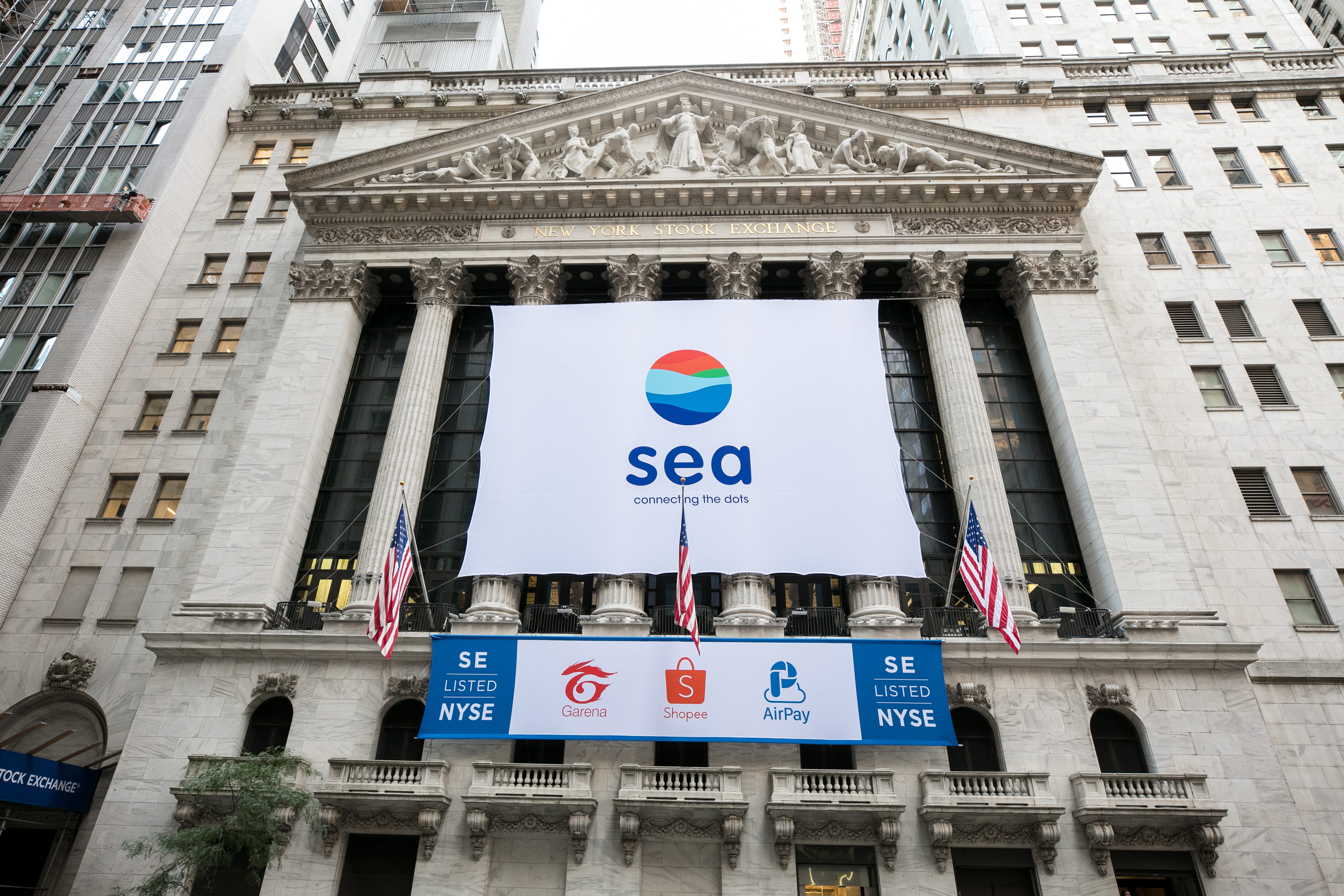
Company: Sea Limited
Ticker: SE
Industry: Consumer / Technology
Date: Q2 2026
Sea is no longer the same company investors argued about in its most fragile years. The business now looks broader, more profitable, and much more operationally controlled than it did when Shopee was still proving it could grow without burning through the balance sheet. In 2025, Sea produced $22.9 billion of revenue, $1.99 billion of operating income, and $1.61 billion of net income. Shopee remained the scale engine, Monee crossed $1 billion of adjusted EBITDA, and Garena had another strong year driven by Free Fire.
That is the easy part of the story.
The harder part is this: Sea is becoming more resilient, but it is also becoming more financially demanding. Monee’s growth is not just software-like monetization layered onto a platform. It now includes a much larger lending book, with on-book net loans receivable of roughly $8.0 billion at year-end and total loans principal outstanding above $9 billion when off-book channeling is included. The balance sheet is stronger than before, but more of that strength is now spoken for.
This review is worth reading now because Sea has crossed from turnaround case to classification case. The question is no longer whether the franchise is real. The question is what kind of franchise it is becoming—and whether the economics are durable enough to support long-duration compounding without letting credit complexity outrun the rest of the business.
Quick View
What this business is: A three-engine consumer internet platform spanning e-commerce, digital entertainment, and digital financial services through Shopee, Garena, and Monee. Sea describes Shopee as the largest pan-regional e-commerce platform in Southeast Asia and Taiwan, and a leading platform in Brazil.
What appears strongest: Scale plus improving profitability across all three segments, with Shopee profitable, Monee past $1 billion of adjusted EBITDA, and Garena still producing large cash earnings.
What appears weakest: The balance sheet is no longer simple. Credit growth is now large enough that liquidity has to be judged against loans receivable growth, funding needs, and underwriting discipline—not against old platform-era assumptions.
What the key debate is: Has Sea become a true multi-engine compounder, or has part of its earnings quality become more contingent on scaling a lending business without a future credit misstep?
Overall Long View review: Stronger business, better economics, sound but more demanding balance sheet, and a clearer moat than it had several years ago. The classification improved; the complexity did too.
What This Review Will Answer
Whether Sea’s stronger operating profile now outweighs the added complexity created by Monee’s credit expansion, and whether that leaves Sea classifiable as a strong long-term compounder rather than simply a stronger version of its old growth story.
Paid subscribers can read the full institutional review below, including the framework scorecard, the balance-sheet analysis, and the evidence that determines whether Sea’s current economics deserve a stronger long-term classification.
