

Here is the evidence on both sides, the catalyst that just appeared, and the exact test that settles it.
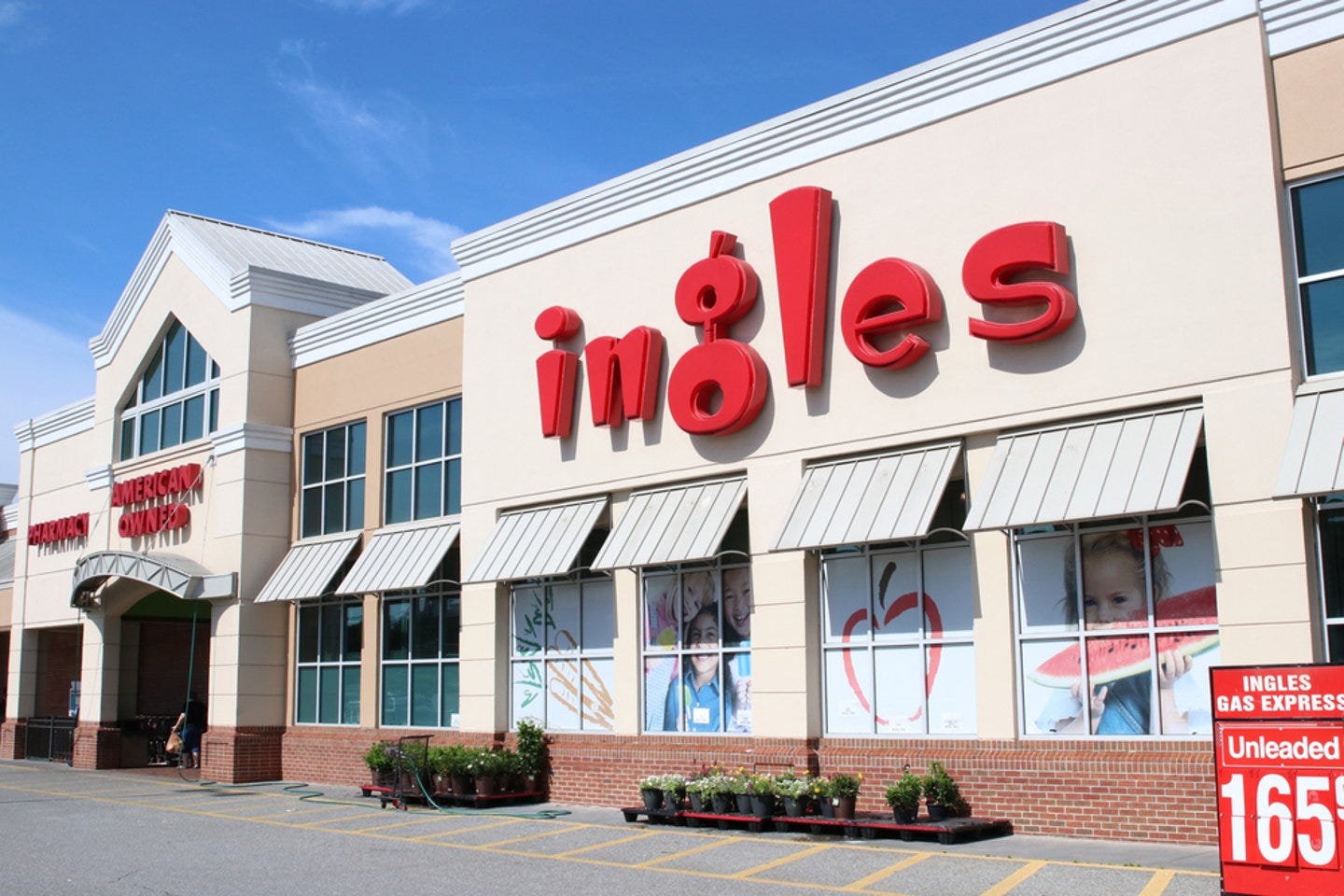
Somewhere in the mountains of western North Carolina sits a grocery chain that owns the ground under about 84 percent of its stores, more than any public supermarket in America. It has never reported a losing year. And the market values the whole company at less than its own book value, while rival grocers trade at ten to sixteen times theirs.
That gap has held for nearly forty years. This is our next Before the Crowd name, Ingles Markets, and the gap is the entire story.
The bet hiding inside the discount
When we ran Ingles through the Stock Story Firewall, one assumption sat under everything.
The bet investors are making is that Ingles’ owned real estate and captive rural customer base create durable earnings power that the market persistently undervalues, relative to book value and the cash the business throws off.
Say it plainly. Bulls are not betting on growth. They are betting on two things at once. That the rural moat is real and durable. And that the real estate underneath it is worth far more than the books admit. If both are true, the discount is a gift. If either is wrong, the discount is correct.
That is the whole question. Everything else is detail.
A real moat, or a melting one
The framework the company demands is an honest one. Is this a defensible local business, or a low-margin grocer with illiquid assets and no pricing power, slowly being surrounded.
The case that the moat is real shows up in the filings. Same-store sales that keep pace with grocery inflation. Long-term debt falling year after year. Fuel centers and pharmacies that keep pulling traffic. Operating cash flow that runs ahead of reported earnings, which is the mark of real profit, not accounting profit. The most recent quarter fit the pattern. Gross margin rose to 24.9 percent from 23.4. Net income doubled. The balance sheet got stronger.
The case that the moat is melting is just as concrete, and it is where the risk lives. Margin compression that returns and accelerates would mean Ingles cannot pass on cost without losing its price-sensitive shoppers. Every new Walmart Neighborhood Market, Lidl, or Aldi inside its six-state footprint chips at the geographic wall. And the most damning signal of all would be capital spending that keeps rising while the returns on it do not.
Hold that last one. It is the hinge.
The hinge: a billion and a half dollars, and not much to show
By the activist’s analysis, Ingles spent about 1.46 billion dollars on stores and property over the past decade while operating income stayed roughly flat.
A billion and a half dollars in. Almost no additional profit out.
This is the exact failure the Firewall flagged as the thesis killer. An owned-property model is supposed to be an advantage. But if a company keeps pouring capital into real estate that does not lift returns, the advantage curdles into a trap. The assets pile up. The earnings power does not. And the discount, the one bulls call a gift, turns out to be the market correctly pricing money that goes in and does not come back.
So the durable-earnings bet has a clear weak point, and it is not hidden. It is the return on all that property.
The family that will not sell, and the outsider who just got in
Here is what has kept the value frozen for forty years.
The Ingle family controls roughly 67 to 70 percent of the voting power through super voting Class B shares. By the Firewall’s read, that control is aligned, not predatory. The family has not been selling. There is no sign of insiders cashing out at everyone else’s expense. They run it for the long term.
But aligned is not the same as activist. A family that will not loot the company is also a family that, for forty years, has not felt forced to unlock its value. No earnings calls. No real estate disclosure. No move to surface what the property is worth. Control kept the company safe and kept the value asleep.
That is what changed on April 30. An activist called Summer Road won a board seat, its nominee Rory Held elected by Class A holders with about 70 percent of the votes cast for that seat. Summer Road owns only about 3 percent of the stock. Its leverage is not votes. It is a credible voice in a room that never had one, with a specific list. Reinstate earnings calls. Audit how capital gets allocated. Study splitting the company so the real estate value can finally be seen.
The Firewall asked, before any of this, what triggering event could realistically unlock the trapped value. It named one possibility directly. An activist accumulation of Class A shares. That is precisely what arrived.
Why this might still go nowhere
The case for doing nothing is strong, and you have to respect it.
The family still controls the votes. One independent director on a board the family controls cannot force a sale, a split, or a payout. Ingles has been visibly cheap for decades, and patient investors have watched this same real estate sit frozen the entire time. Entrenched control is the most durable reason a discount survives, and sunlight may simply break against it.
If that happens, the stock that ran toward its highs on hope drifts back to being cheap for the same reason it always was.
The test, in three questions
This is where we leave narrative and set the bar. The Firewall reduced Ingles to three questions, and the filings will answer all three.
First, the asset. In the next annual report, does the property schedule, or any appraisal or sale-leaseback, finally establish what the owned real estate is actually worth, above book or not.
Second, the moat. Across the coming quarters, does gross margin hold, or does compression return and accelerate as the discounters expand.
Third, the unlock. Does the new board seat produce anything you can point to, an earnings call, real estate disclosure, a capital review, a step-up in cash returned, or does the family quietly absorb it.
A clear yes on the asset and the moat, plus any real motion on the unlock, and the forty-year discount finally has a reason to close. Continued silence, more capital poured in at flat returns, and renewed margin pressure, and the discount was right all along.
We are not calling it. We are placing it, before the crowd, with the test written down.
What we are watching, and what it teaches
Ingles clears the Firewall for deeper research. The family is aligned. The narrative is coherent. The asset may well be real. But coherent is not proven, and the two things that matter most, the true value of the real estate and the durability of the moat, are exactly the two things the filings have not yet confirmed.
So we will be reading the property schedule, the margin line, the return on all that capital, and any sign the boardroom has changed. Those tell us whether this is a hidden asset or a value trap wearing a real estate costume.
And here is the idea to keep. An asset is only worth what someone can eventually force it to become. Ingles has owned this real estate for decades, and for decades it stayed locked behind family control and capital poured back at flat returns. Cheap assets do not reward you. Unlocked assets do. Before you buy any sum-of-the-parts story, ask the only question that matters. What forces the parts to be summed. For forty years at Ingles, the answer was nothing. As of April, for the first time, there is a name in the room whose entire job is to be that answer.
We will read the filings the day they land and tell you which way it broke. Subscribe to get the verdict the moment it does.
Not investment advice. The subscriber decides.