

Understanding Pricing Power
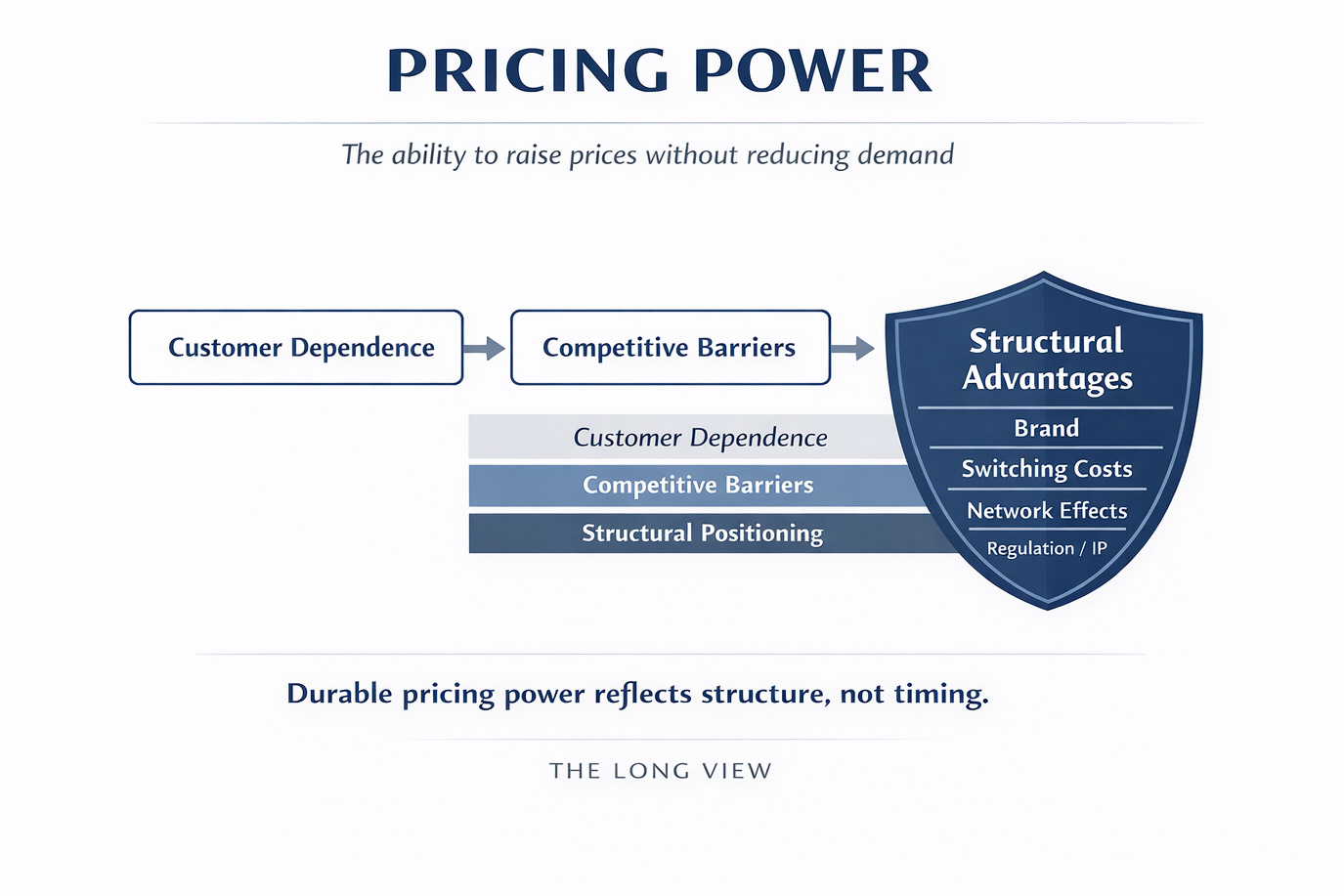
At its core, pricing power reflects a company’s ability to raise prices without losing meaningful customers. This strength is not simply about brand perception or market dominance it is about the underlying structure that supports sustainable pricing.
Key Examples
Microsoft: Pricing power emerges from deep enterprise integration. Products are embedded in workflows across organizations, making them essential. Price increases are incremental and often absorbed within broader service agreements. Customers stay because of operational dependence, not just negotiation leverage.
ASML: Here, pricing strength is rooted in technological scarcity. With no substitute for its extreme ultraviolet systems, customers commit years in advance. Pricing durability stems from necessity rather than brand.
Adobe: The subscription-based model of Creative Cloud embeds itself in professional workflows. Pricing changes occur within a normalized, recurring structure. Behavioral entrenchment stabilizes economics.
MercadoLibre: In emerging markets, ecosystem-based pricing strength is evident. Marketplace, payments, and logistics reinforce one another. Pricing adjustments happen within coordinated services, not isolated products.
The Pricing Power Evaluation Checklist
To assess a company’s pricing power, consider these questions:
Can the company raise prices without losing meaningful customers?
Is pricing strength based on structure or brand perception?
Does switching involve operational disruption?
Are price adjustments incremental and normalized?
Why It Matters
Pricing power reflects structural positioning and disciplined execution. Durable returns tend to follow businesses that can adjust pricing without destabilizing demand. Frameworks like this allow investors to move beyond headlines and opinions, enabling consistent evaluation. They provide a way to assess a company’s long-term investability based on structure, discipline, and durability.
The Long View’s weekly case studies are designed to help readers learn how to apply these frameworks across different businesses and market environments.