

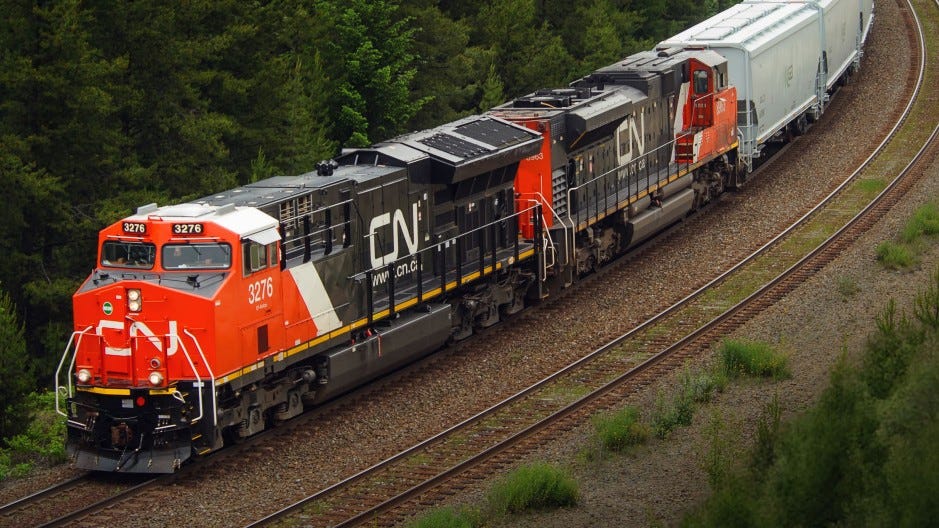
Company: Canadian National Railway
Ticker: CNI
Industry: Industrials
Date: Q2 2026
Canadian National Railway is not hard to admire. It is hard to classify correctly.
The network is real. Nearly 20,000 miles of track link Canada’s coasts to the U.S. Midwest and Gulf Coast. More than 300 million tons move across that system each year, and the freight base is broad enough that no single commodity story explains the business.
But the real question is not whether CN is a good railroad. It is. The question is what kind of compounding business it is from here. A strong network and a deep reinvestment runway are not the same thing.
That is the tension in CN. The moat still looks stronger than the runway. This review examines whether CN should be understood as a long-duration compounder or as a mature infrastructure allocator whose future returns depend more on discipline, pricing, and cash conversion than on broad internal expansion.
Quick View
What this business is: A continental freight railroad whose advantage comes from owning routes, terminals, and corridor relevance that would be extraordinarily difficult to reproduce.
What appears strongest: The network position, freight diversity, and the ability to turn a capital-heavy asset base into real free cash flow.
What appears weakest: The reinvestment path looks narrower than the franchise strength.
What the key debate is: Whether CN is still best understood as a compounder, or increasingly as a mature allocator.
Overall Long View assessment: Strong railroad, real moat, sound discipline, but not an obviously deep-runway story.
What This Review Will Answer
Whether CN’s future value creation should be judged mainly by reinvestment breadth, or by how well management protects the network, prices the asset, and returns cash once the system is already mature.
Paid subscribers can read the full institutional review below, including the framework scores and the broader investing lesson behind them: how to tell when a great infrastructure asset is still a compounder, and when it is becoming a mature allocator.
