

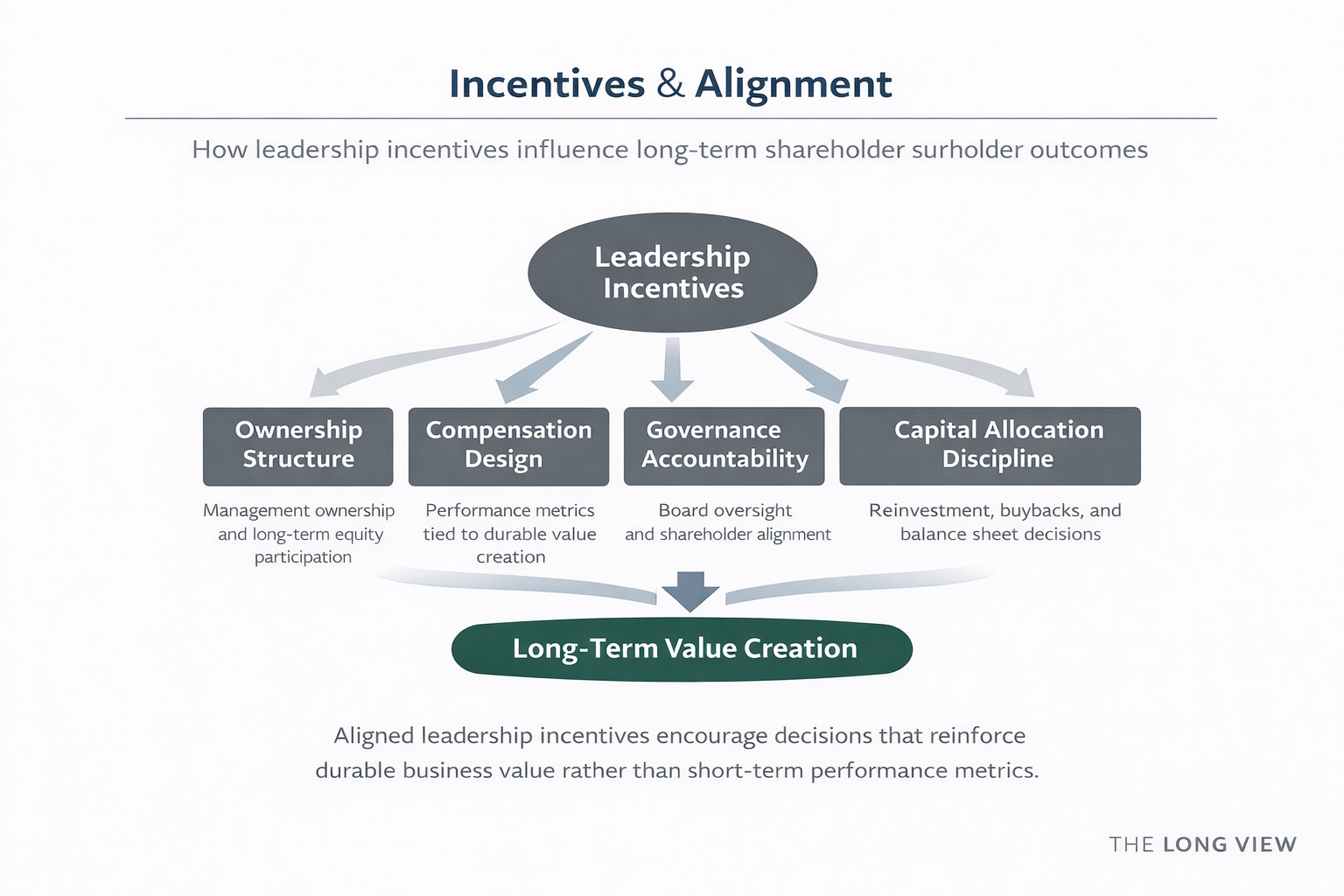
Incentive alignment determines how executives allocate capital, manage risk, and prioritize long-term versus short-term objectives.
Ownership structure, compensation design, and governance mechanisms can all influence whether management decisions reinforce durable business models.
Microsoft illustrates how equity-based compensation structures can support long-duration investment decisions. Leadership incentives tied to long-term share performance encourage capital allocation toward durable platforms such as cloud infrastructure and artificial intelligence.
Hermès provides a different form of alignment through family ownership. Governance decisions often reflect generational stewardship rather than quarterly performance metrics. Investments in brand equity and product craftsmanship illustrate how long-term incentives shape corporate strategy.
Cloudflare demonstrates how incentive structures can support infrastructure investment in early-stage platforms. Leadership compensation aligned with long-term equity outcomes may encourage reinvestment into network expansion rather than short-term profitability.
Adyen offers an example of founder leadership shaping capital allocation behavior. Founder ownership can encourage strategic patience during platform development phases, particularly in technology infrastructure businesses.
Evaluation Checklist
When assessing incentives and alignment, investors may consider several structural questions.
Does leadership maintain meaningful ownership in the business?
Are compensation structures tied to long-term performance metrics?
Do capital allocation decisions reflect durable strategy?
How does management behave during industry downturns?
Frameworks allow investors to move beyond narrative explanations and toward structured analysis.
Understanding incentive alignment helps explain why certain companies invest patiently in platform infrastructure while others prioritize near-term financial outcomes.
Long View research is designed to help investors examine businesses through durable frameworks rather than short-term narratives
.